

Who Should Own Your Trademark: You or Your Business?
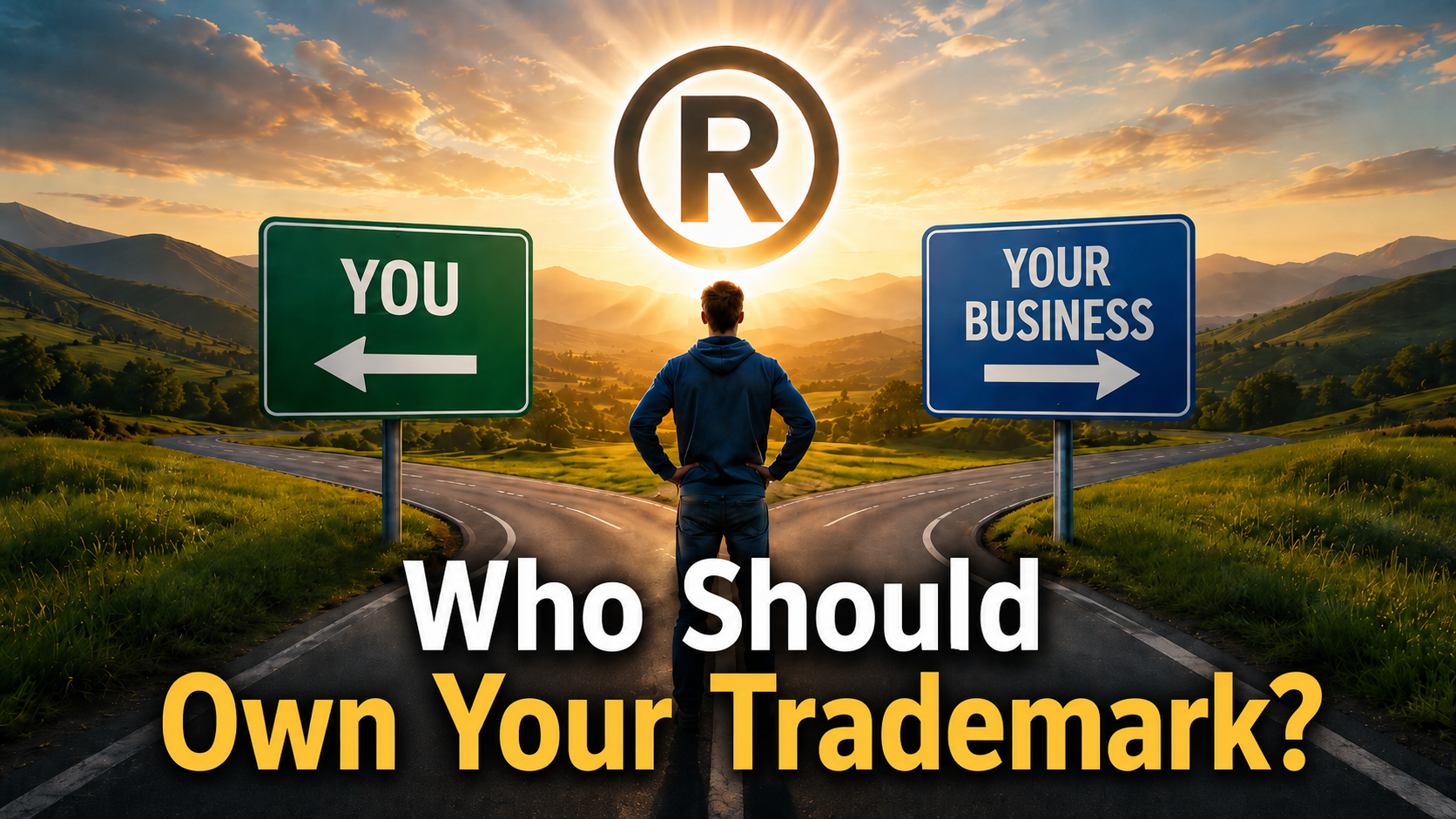
When you file a trademark application, one of the first questions you need to answer is: who owns the trademark?
It seems simple but getting it wrong can cause serious problems. Here’s what you need to know before you answer that question.
Why This Matters
The USPTO, the federal government agency that handles trademark registration, will not register a trademark unless the owner can show that it is being used in business.
So, it’s important to know who is actually using and controlling the brand: you or your business?
When I say “you,” I mean you, the human being reading this article.
When I say “your business,” I mean the business entity, like the corporation or LLC you formed when you started your business.
“You” vs. “Your Business”
Most business owners are not doing business in their personal name.
When you started your business, you created an LLC or a corporation, and you use its name on contracts, invoices, and advertisements.
This means you’re doing business through a business entity, so that entity should own the trademark.
By listing your business as the owner of the trademark, you make sure the business keeps control of it.
This is important if one day you want to license your brand, raise money from investors, or sell the whole operation.
As your business grows, the trademark may become more valuable. But if your business does not own the trademark, it cannot make use of that increased value.
Think about it: you wouldn’t pay someone for access to something they don’t own. And that’s exactly the case when your business doesn’t own its trademarks.
“What If I Am the Brand?”
If your brand is built around your name, as is the case for many coaches, athletes, and influencers, this can feel more complicated. After all, the value of the brand is tied closely to you as a person.
Even then, it may still make sense for a business entity to own the trademark. In some cases, that entity may be a separate company created just to own and manage the brand. This type of company is called a holding company.
Listing the right owner can also help keep your business and personal affairs separate.
If the trademark belongs to your business, then disputes about the trademark are more clearly tied to the business.
But if you personally own the trademark, you may be pulled into those disputes as an individual.
The Only Exception
The main situation where you should list yourself as the owner of a trademark is when you haven’t set up a business entity yet. Even then, it’s still not a good idea.
Doing business without a business entity is needlessly risky and puts your personal assets, like your savings, car, or other property, at risk.
But if, for some reason, you don’t have a business entity and still want to file a trademark, you’d have to file it in your own name.
Minor Details? Major Problems!
You might not see what the issue is, but make no mistake, putting the wrong owner is a big deal.
Depending on the mistake, the USPTO may not let you fix it.
That’ll force you to restart the whole process from the beginning. Do not pass go. Do not collect $200.
Key Takeaways
To complete a trademark application, you must list someone as the owner of a trademark.
Most people should list their LLC or corporation as the owner of the trademark because they are doing business through it.
If you do not do business through an LLC or corporation, then you may put yourself as the owner.
If you put the wrong owner on your trademark application, you may have to start over because of the mistake.