

U.S. Trademark Attorney Required: Foreign-Domiciled Applicants
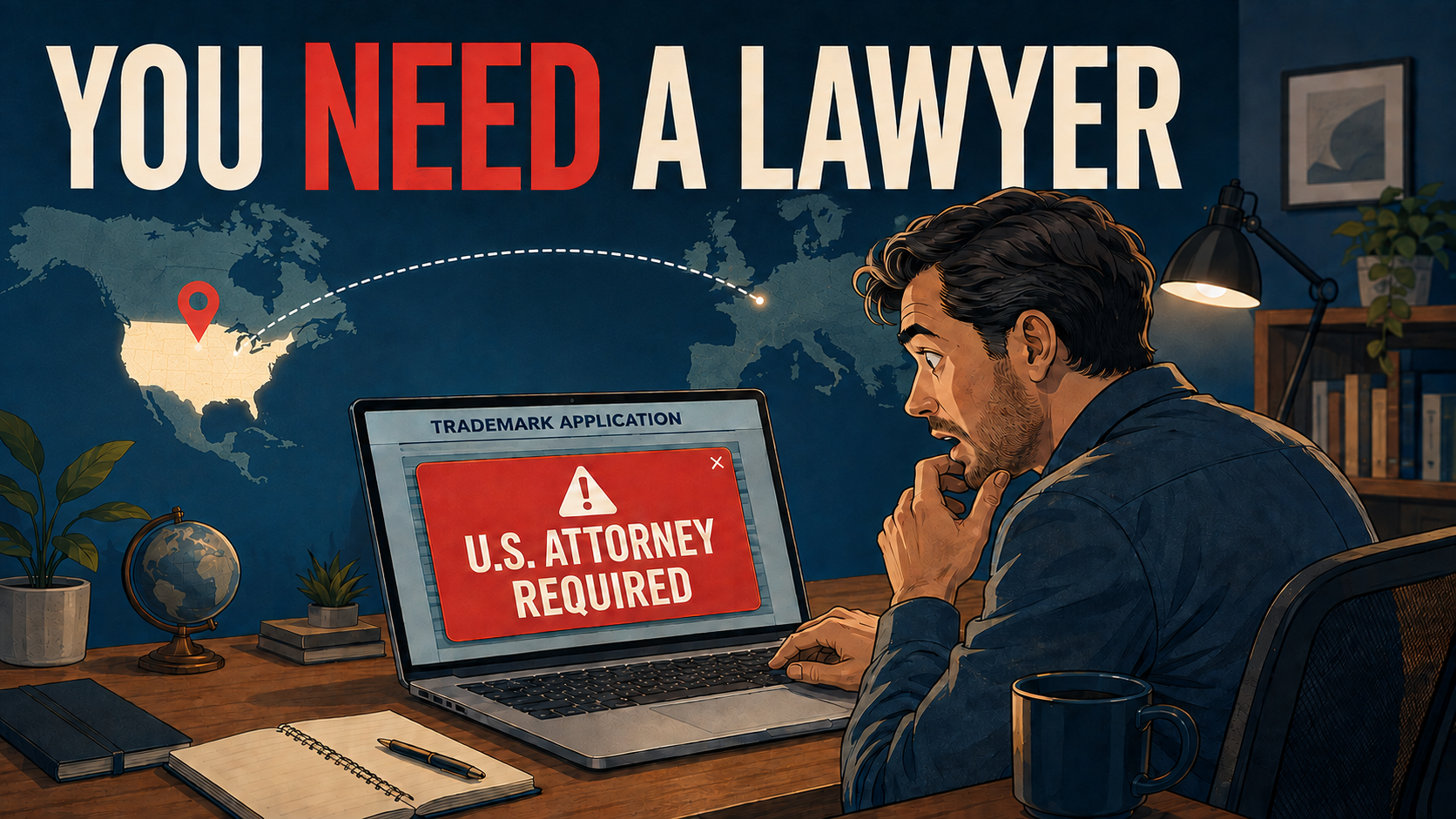
You NEED a Lawyer
Most people are not legally required to have a trademark attorney to file a trademark application.
It’s best practice to hire one, but you’re free to make mistakes if you choose.
There’s one exception though.
If you’re in this group, you are required by rule of the United States Patent & Trademark Office (the “USPTO”) to be represented by an attorney licensed to practice law in the United States.
The group: foreign-domiciled individuals and entities.
This wasn’t always the case. However, the USPTO had noticed an increasing number of inaccurate and potentially fraudulent filings from foreign-domiciled individuals and, in the interest of making sure foreign-domiciled individuals and entities were receiving competent representation, decided to act. And on August 3, 2019, the rule went into effect.
What Does It Mean to Be Foreign-Domiciled?
So, what does it mean to be a foreign-domiciled individual or entity?
The answer depends on whether you’re an individual or an entity, but the core idea is the same: you’re not based in the United States.
If you’re an individual, your domicile is the place where you live and consider your primary home.
If you’re an entity, your domicile is the place where senior executives typically control the entity’s activities.
Domicile vs. Citizenship
It’s important to note that citizenship is not the same thing as domicile.
They are two distinct concepts.
An American citizen living abroad could be considered a foreign-domiciled individual.
If they are, they must use an attorney to file a trademark application with the USPTO even if they were free to return to the United States at any time.
The opposite is also true.
A foreign national that lives in the United States could be considered a US-domiciled individual and would be free to file a trademark application with the USPTO without an attorney.
The same goes for entities.
A Delaware corporation with a principal place of business outside of the United States is a foreign-domiciled entity and would need a lawyer to complete a filing with the USPTO.
While a Bahamas LLC with a principal place of business inside the United States could be considered a US-domiciled entity free to complete a filing with the USPTO on its own behalf.
What If I File It Myself Anyway?
If you’re not domiciled in the United States and submit a trademark application to the USPTO, your application won’t slip through the cracks.
When the USPTO’s Examining Attorney reviews your application, they will flag it and issue an Office Action, which is a refusal to approve your application because of a technical error or legal issue.
In this case, you will receive an Office Action because you are not represented by a U.S.-attorney.
You’ll then have a certain amount of time, typically 3 months, to appoint a U.S.-attorney who will respond to the Office Action on your behalf.
Key Takeaways
Since August 3, 2019, foreign-domiciled individuals and entities need a U.S.-attorney in all interactions with the USPTO.
Domicile is different than citizenship:
If you are an individual, your domicile is where your primary residence is.
If you are an entity, your domicile is where you are headquartered.
A trademark application submitted to the USPTO by a foreign-domiciled individual or entity without a U.S.-licensed attorney will be rejected when reviewed by an Examining Attorney.