

Five Types of Trademarks
What’s a Trademark?
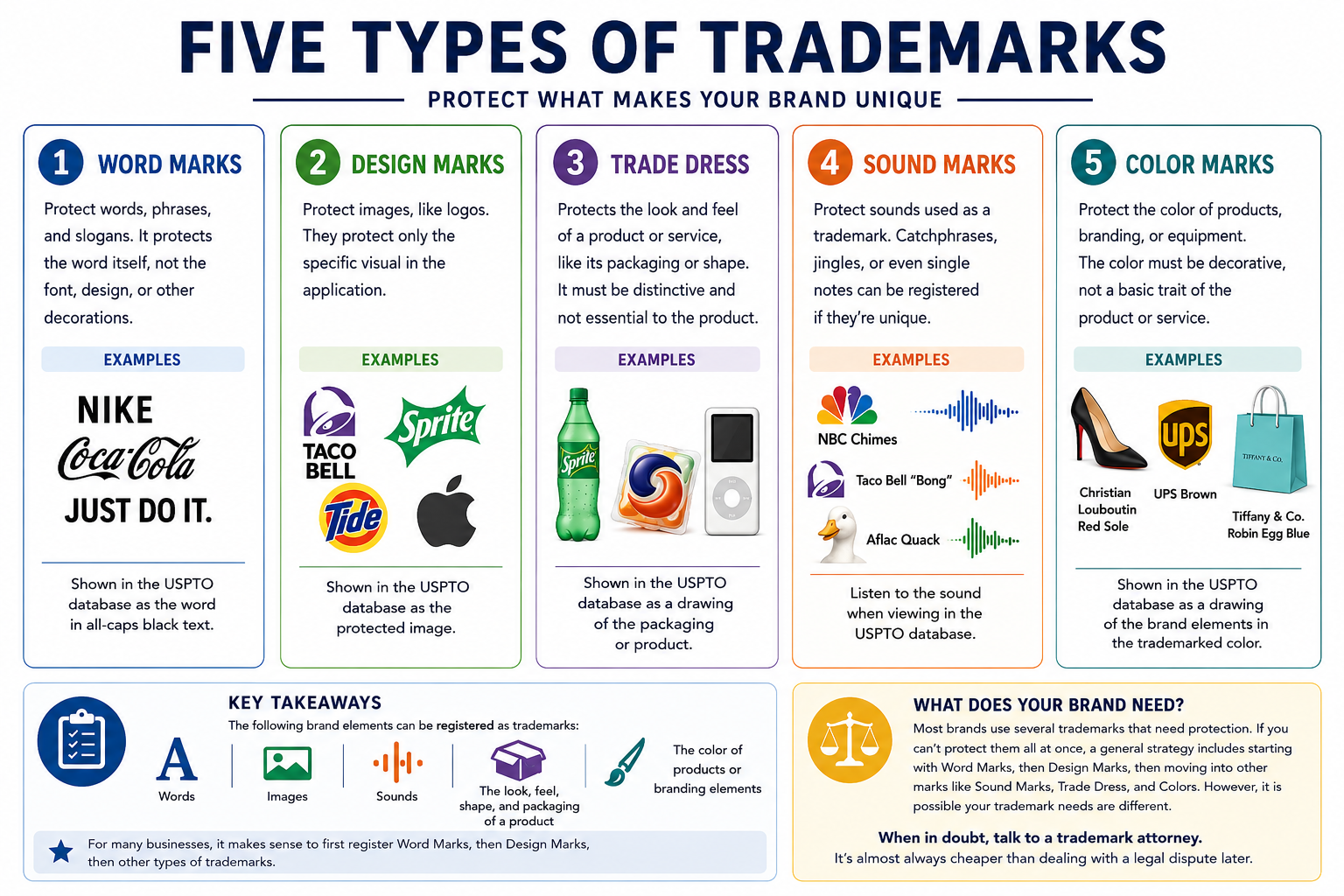
If you’re a business owner, you know you should trademark your brand. But does that mean exactly. Well, a trademark is something that tells a customer who is providing the good or service. Since the definition is very broad, many things can be a trademark. If you register only one, you risk leaving the other parts of your brand unprotected. Here’s a list of five common types of trademarks.
Word Marks
A Word Mark protects words, phrases, and slogans. It protects the word itself, not the font, design elements, or other decorations of the word. Word Marks offer very broad protection because of this.
Examples of Word Marks include:
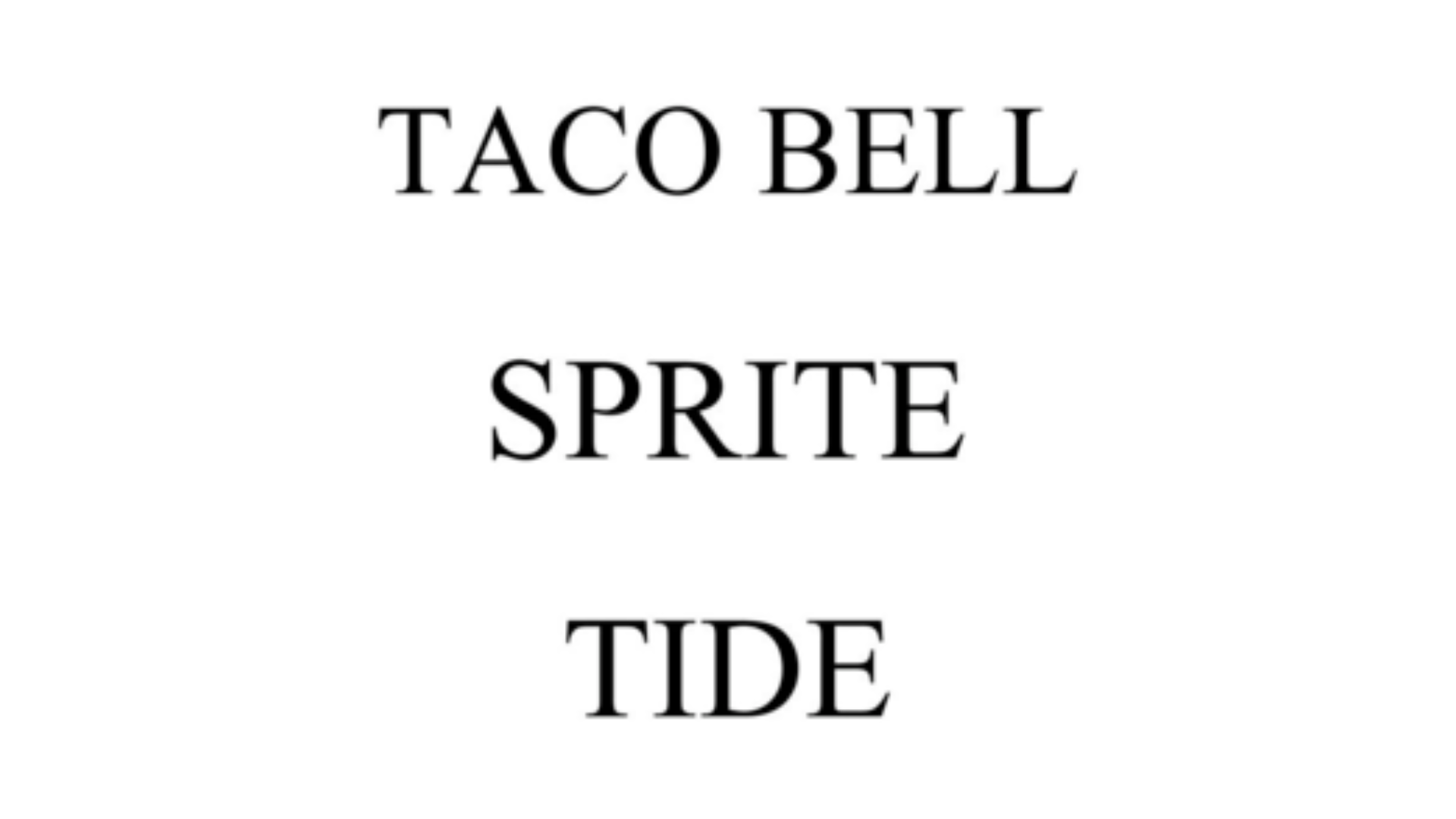
You’ll often see Word Marks in the USPTO’s database as the protected word in all-caps black text.
Design Marks
A Design Mark protects an image, like a logo. Unlike Word Marks, which offer very broad protection, Design Marks protect only the specific visual included in the application. If the visual elements of a trademark are important, it would be registered as a Design Mark and not a Word Mark.
Examples of Design Marks include:
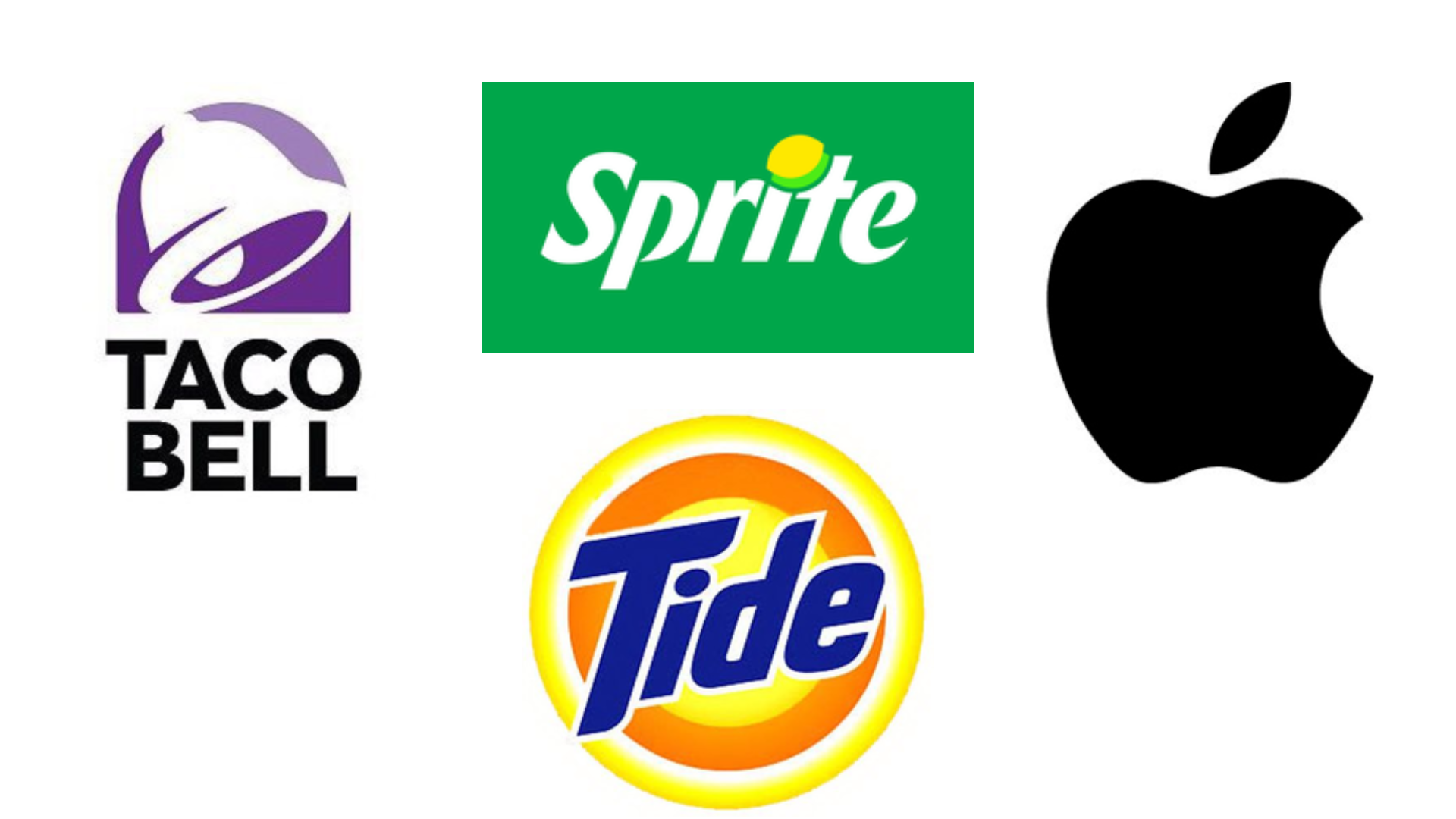
The logos for Taco Bell, Sprite, Tide, and Apple.
You’ll see Design Marks as the protected image in the USPTO’s database.
Trade Dress
Trade Dress protects the look and feel of a product or service. This usually means the packaging or shape of a product. To be protectable, the Trade Dress must be distinctive enough for customers to tell who made it and it cannot be an essential feature of the product.
Examples of Trade Dress include:
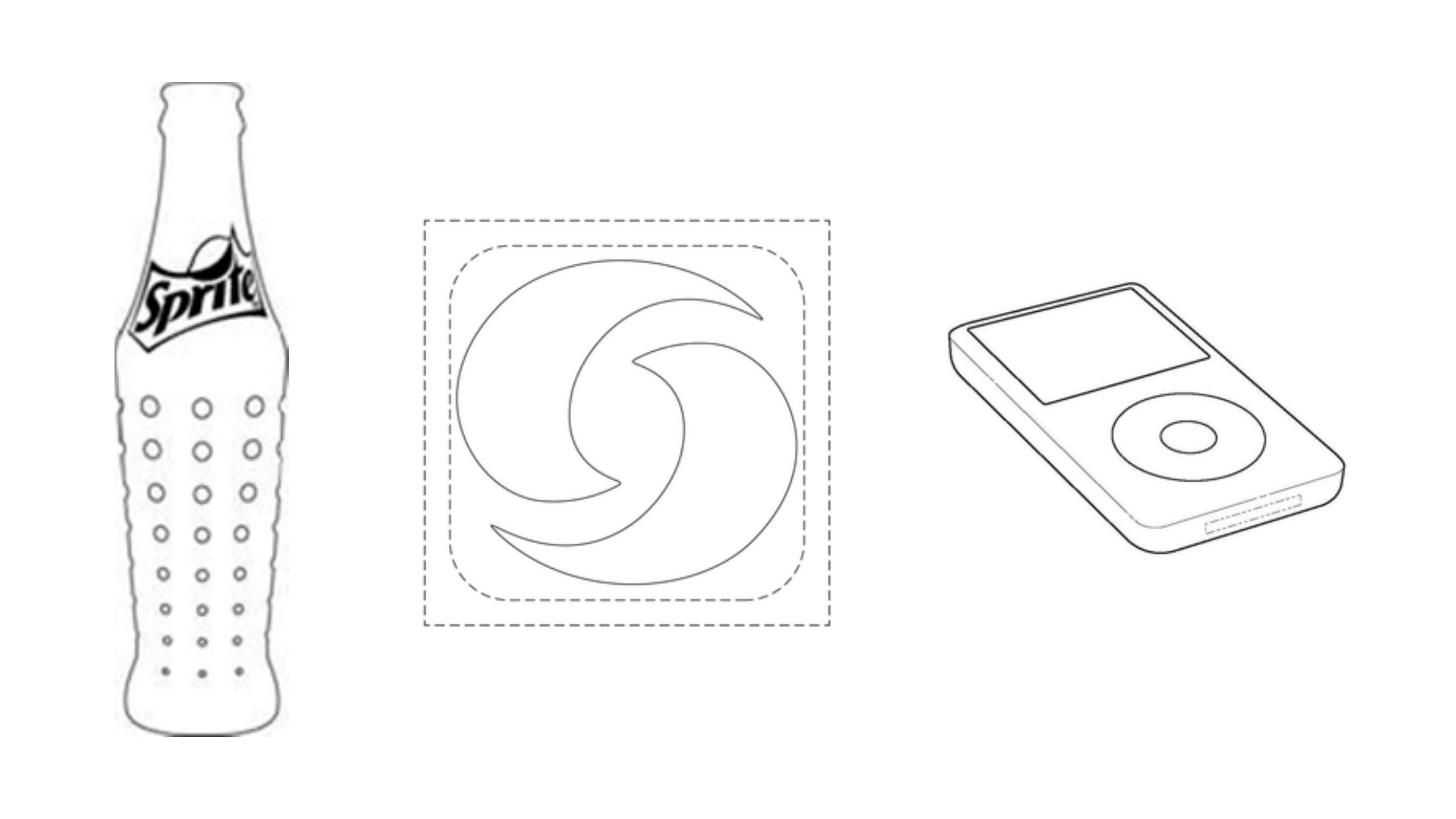
The shape of a bottle of Sprite, a Tide Pod, and an iPod
You’ll find see Trade Dress as a drawing of the packaging or product in the USPTO’s database.
Sound Marks
A Sound Mark is exactly what it sounds like. A sound that is used as a trademark. Everything from catchphrases to jingles to single notes can be registered as Sound Marks, if they’re truly unique to the brand.
Examples of Sound Marks include:
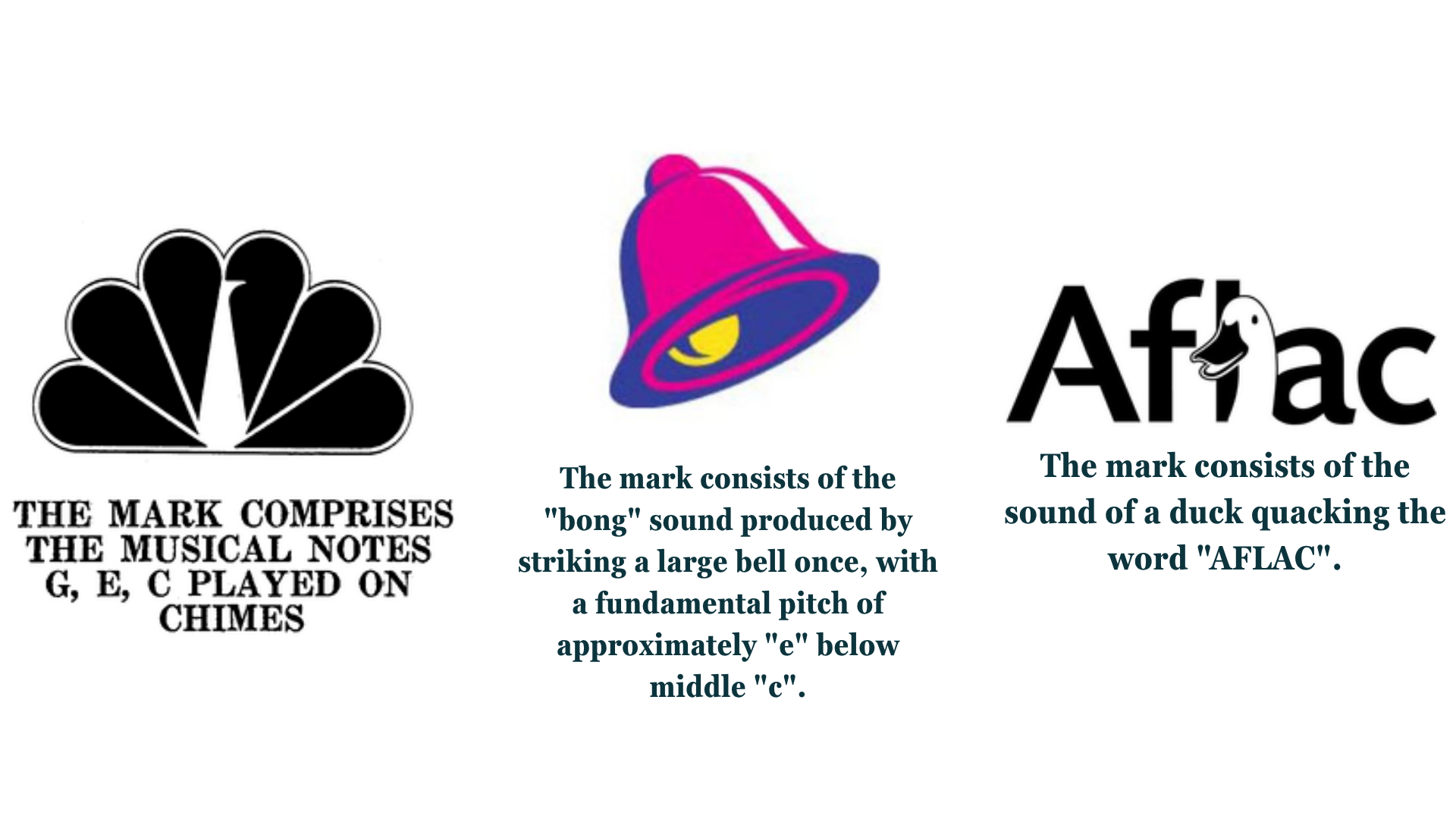
The NBC chimes, The Taco Bell “bong”, and the Alfac quack.
It can be hard to find Sound Marks in the USPTO’s database, but you’ll be able to listen to what’s protected when you find one.
Color Marks
Colors can be trademarked. Not just the colors on your Design Marks, but the colors of your products, branding, or equipment. Like Trade Dress, the color has to be decorative, meaning it cannot be a basic trait of the product or service you’re selling.
Examples of Color Marks include:
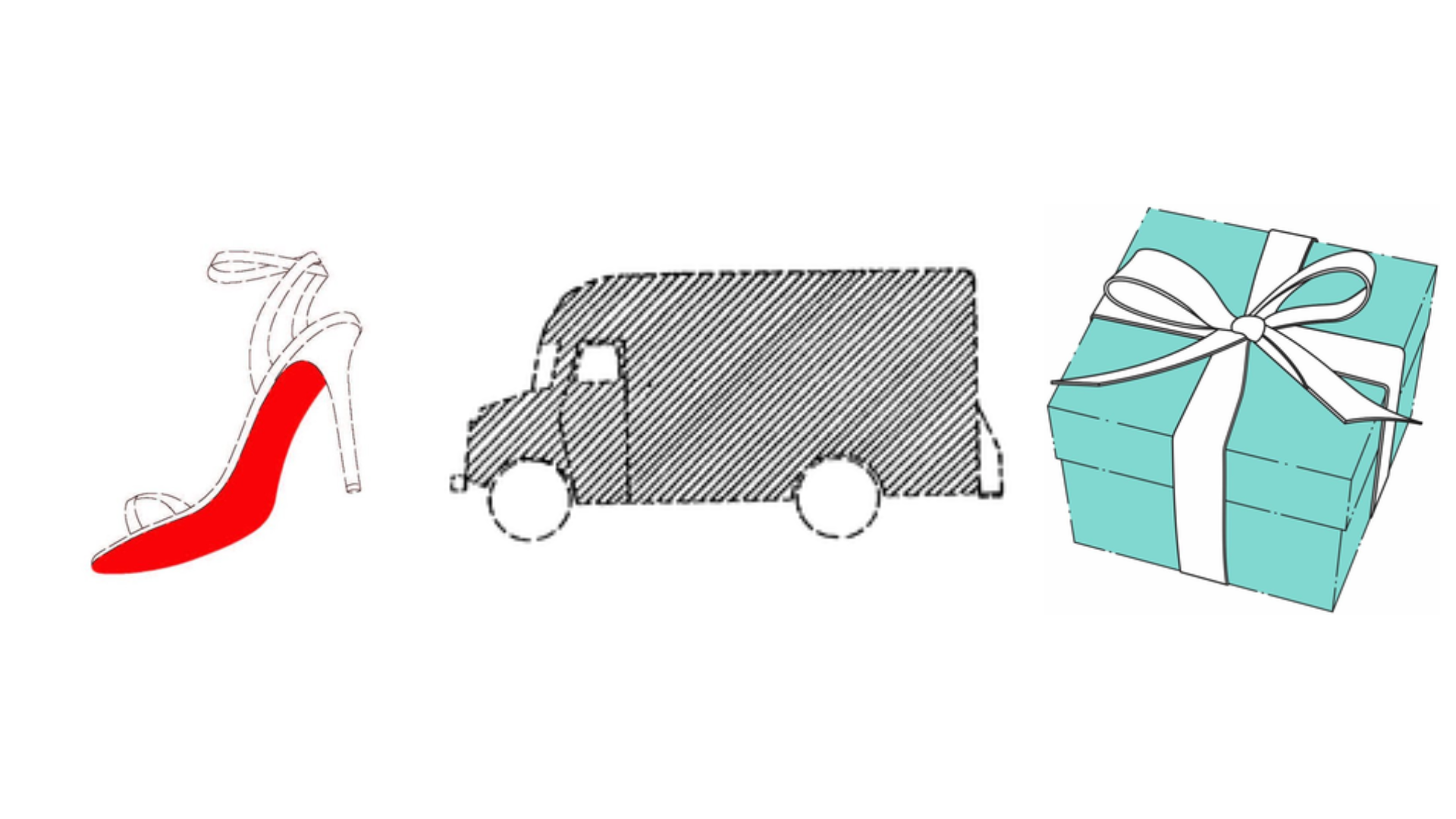
The red sole of a Christian Louboutin, the brown color of UPS trucks, the robin egg’s blue of Tiffany’s packaging
You’ll see color marks in the USPTO’s database as a drawing of the brand elements in the trademarked color.
What Does Your Brand Need?
Most brands use several trademarks that need protection. If you can’t protect them all at once, a general strategy includes starting with Word Marks, then Design Marks, then moving into other marks like Sound Marks, Trade Dress, and Colors. However, it is possible your trademark needs are different.
When in doubt, talk to a trademark attorney. It’s almost always cheaper than dealing with a legal dispute later.
Key Takeaways
The following brand elements can be registered as trademarks:
Words
Images
Sounds
The look, feel, shape, and packaging of a product
The color of products or branding elements
For many businesses, it makes sense to first register Word Marks, then Design Marks, then other types of trademarks.
If you have questions about what’s best for yout, consult a trademark attorney.